Contents
Tokyo has great gyms — finding the right one as an English speaker is the challenge
Tokyo's fitness infrastructure is excellent by any global standard. There are over 1,200 Anytime Fitness locations in Japan alone, and virtually every neighborhood with a train station has at least two or three gym options within walking distance. The challenge for English speakers isn't a shortage of gyms — it's knowing which locations actually work well for non-Japanese speakers, and which neighborhoods have the density and expat population to make daily gym life comfortable.
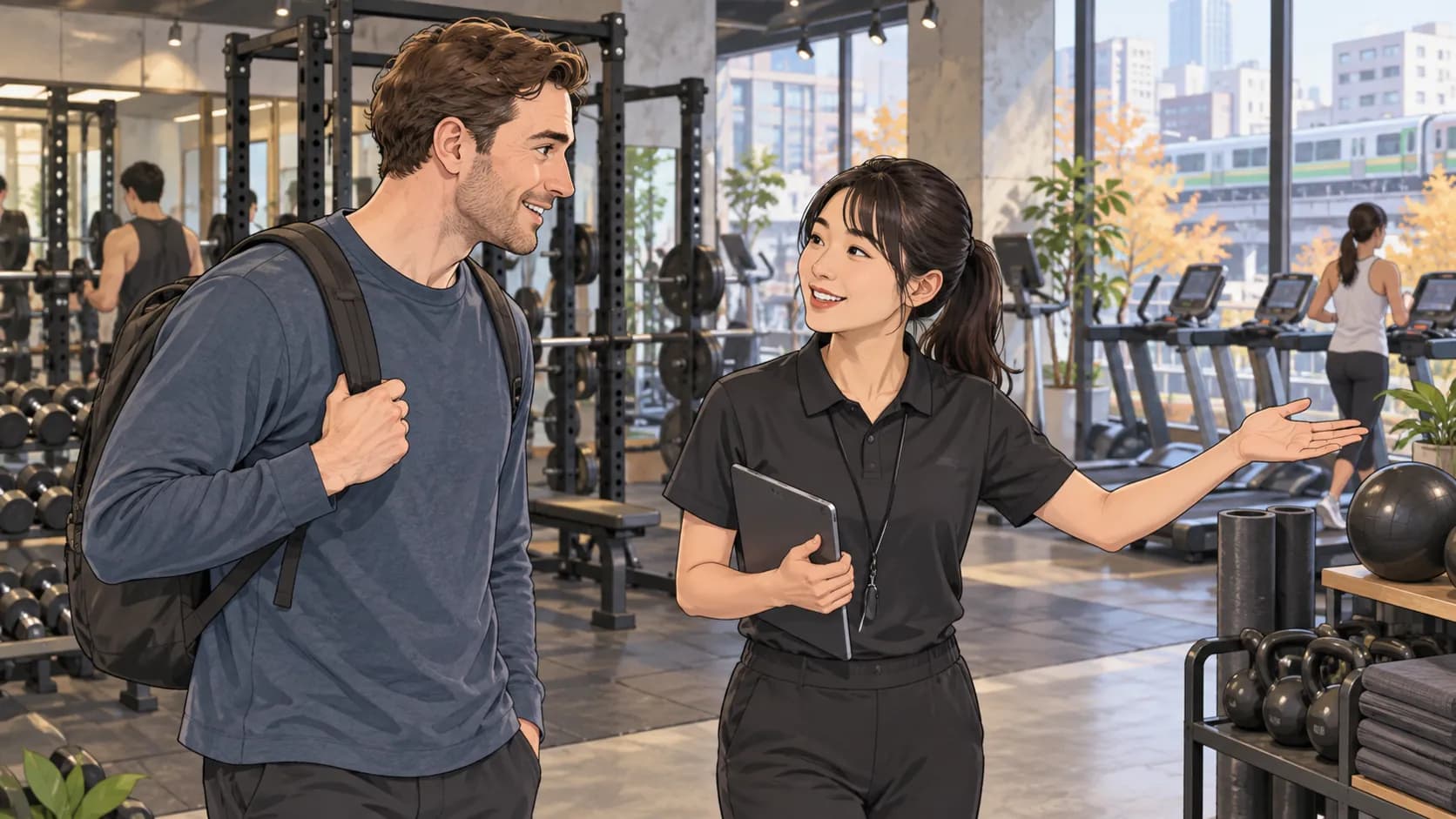
This guide breaks it down neighborhood by neighborhood, with specific guidance on what to look for and what to realistically expect.
A quick note on "English-friendly" in Tokyo
Very few gyms in Tokyo actively advertise English-speaking staff, and even fewer have it as a consistent service. What "English-friendly" actually means in practice at most gyms is:
- Basic equipment signage is in English or bilingual (most major chains)
- Staff may speak some English, or will use a translation app without frustration
- You won't be turned away for not speaking Japanese
- The experience of actually working out (getting in, using equipment, getting out) requires almost no Japanese
Where Japanese becomes relevant: the sign-up paperwork, cancellation forms, and any communication about billing issues. These are infrequent interactions but require preparation.
Neighborhoods, and what they mean for gym choice
Minato-ku (Roppongi, Azabu-Juban, Hiroo, Shirokane)
This is the most international neighborhood in Tokyo. A significant percentage of residents are foreign nationals (particularly around Azabu-Juban and Hiroo), and the service industry here has the highest concentration of English-capable staff in the city.
What this means for gyms: Staff at gyms in this area are more accustomed to English-speaking members than anywhere else in Tokyo. Some personal trainers in Roppongi and Hiroo actively market themselves to the expat community and conduct sessions entirely in English.
Best options in Minato-ku:
- Anytime Fitness Roppongi / Azabu-Juban: Multiple locations, staff familiar with international members, key fob access means minimal daily staff interaction needed
- Individual personal trainers: Instagram search for Tokyo-based English-speaking trainers will surface many in this area — this market is well-developed
- Hotel gyms (ANA Intercontinental, The Prince Park Tower, etc.): If you're a guest or have a membership, hotel gym facilities in Roppongi are high-quality and English-first by nature
What to watch out for: Gyms in Roppongi specifically can have a different crowd late at night (post-bar gym-goers). If you prefer a focused, quiet training environment, Hiroo or Azabu-Juban locations tend to be calmer.
Shibuya-ku (Shibuya, Daikanyama, Nakameguro, Ebisu, Harajuku)
Shibuya is central, well-connected, and has a younger demographic with higher English proficiency than many other areas. The neighborhood's international fashion and creative industries attract a cosmopolitan crowd, and gyms here reflect that.
Gym options:
- Anytime Fitness Shibuya: Multiple locations in and around the station. The Shibuya scramble area has high foot traffic but the gyms in this area tend to be well-maintained.
- Basic-fit / Equinox-tier boutique studios: Shibuya has several international-style boutique fitness studios that operate in English or bilingual
- Chocozap: Several micro-locations in Shibuya ward — good for a quick session near the office without needing to speak to anyone
Daikanyama and Nakameguro specifically have a higher concentration of independent, design-forward yoga studios and pilates studios that often attract an international clientele. If you're looking for a boutique feel with possible English instruction, this is the area to explore.
Shinjuku-ku (Shinjuku, Kabukicho, Yoyogi)
Shinjuku is dense and has every gym type imaginable. The challenge is that it's also busy, loud, and the gym experience can feel rushed at peak hours.
West Shinjuku (Shinjuku Station west exit, Nishi-Shinjuku) is office-heavy and has gyms catering to the business crowd. Konami Sports has a large facility here. Staffed hours can be useful for new members, and the area is clean and accessible.
East Shinjuku / Kabukicho is nightlife-heavy. Some 24-hour gyms in this area have a very different atmosphere at 2am versus 10am. Not necessarily a problem, but worth knowing if late-night training is part of your schedule.
Yoyogi area has Yoyogi Park nearby and gyms that attract a runner/outdoor-cross-training crowd. If you run the park and want to supplement with indoor work, this area has good options.
Chiyoda-ku and Chuo-ku (Marunouchi, Nihonbashi, Akihabara)
The business and financial districts of central Tokyo. Gyms here are primarily serving the weekday office crowd, which means:
- Very busy Monday–Friday 7–9am and 6–8pm
- Very quiet on weekends
- Higher proportion of corporate law firm / finance / consulting workers → gyms tend to be well-maintained and serious
Corporate gym access: Many large office buildings in Marunouchi have in-building gyms accessible only to tenants. If your company is in one of these buildings, check first — you may have free or heavily discounted access already.
Anytime Fitness Marunouchi area: Several locations, mainly used by office workers. Key fob access and well-equipped for a morning or after-work session.
Koenji, Nakano, Shimokitazawa (West of Shinjuku)
These neighborhoods have a bohemian, arts-and-music character. The expat population here tends toward people who've been in Japan for longer, often speak Japanese, and are integrated into local life rather than the "international district" bubble.
Gyms in this area are primarily domestic-chain oriented. Staff are less likely to speak English than in Minato or Shibuya, but the environments are often less crowded and more affordable.
Good for: Long-term Tokyo residents who want a neighborhood gym without the Minato-ku price premium. Joyfit24 and Anytime Fitness both have locations in these areas at slightly lower price points.
Kita-ku, Adachi-ku, Edogawa-ku (Northern and Eastern Tokyo)
These are less-expat-heavy residential wards. The gym experience here is similar to a domestic Japanese gym: Japanese-speaking staff, Japanese-language signage, lower monthly costs, and less crowding than central areas.
If you live here and need a gym, Anytime Fitness will be your most comfortable option due to the key fob system. Joyfit24 is another reasonable choice. Expect to navigate sign-up paperwork in Japanese (translation apps work fine).
Chain-by-chain assessment for English speakers in Tokyo
Anytime Fitness — Most consistently foreigner-comfortable
English support: 3/5
Equipment quality: 4/5
Monthly cost: ¥7,700–¥9,900
Why it works for expats: The international brand familiarity, key fob access, multilingual equipment sometimes, and the global nature of the chain means staff are more accustomed to non-Japanese members. If you've used Anytime Fitness in another country, the Japanese experience is broadly similar. You can also use your membership at locations globally when you travel.
Best Tokyo locations for expats: Roppongi, Azabu-Juban, Hiroo, Shibuya, Marunouchi
Chocozap — Best for zero-friction daily access
English support: 2/5 (app UI, not staff)
Equipment quality: 2/5
Monthly cost: ¥3,278
Why it works for expats: The entirely app-based model means you never need to talk to staff to get in or use the gym. Sign-up is through the app with minimal Japanese reading required. If your goal is simply to have somewhere to do 20 minutes of movement near your apartment without language friction, Chocozap is hard to beat at ¥3,278/month.
Limitation: No free weights, very basic equipment. For serious training, this is a starter option or complement to another gym, not a main facility.
Konami Sports / Central Sports — Best facilities, highest Japanese literacy required
English support: 1/5
Equipment quality: 5/5
Monthly cost: ¥8,800–¥14,300 (full access including pool)
Why it can work for expats: If you have N4+ Japanese or a Japanese-speaking partner who can help you with the paperwork, these full-service clubs have the best facilities in Tokyo for the money. Pool, studio, sauna, full weight room. Once you're a member, daily use doesn't require much Japanese.
Not recommended for: Beginners in Japan, people who need English support, those likely to move and need to cancel.
Joyfit24 — Budget-friendly middle ground
English support: 2/5
Equipment quality: 3/5
Monthly cost: ¥5,478–¥7,000
Why it works for some expats: Lower price than Anytime Fitness with reasonable equipment. Staff vary a lot by location — some Joyfit24 branches in expat-heavy areas have staff who are comfortable with basic English communication. Key issue: equipment quality and freeweight area is generally smaller than Anytime Fitness.
Personal trainers and boutique studios — Best results, highest cost
For English-speaking personal trainers specifically, Tokyo (particularly Minato-ku and Shibuya) has a genuine market. Many trainers are bilingual Japanese nationals who have studied or worked abroad, or native English speakers who have obtained Japanese training certifications.
Finding English-speaking trainers:
- Instagram: search #tokyopersonaltrainer #英語パーソナルトレーニング
- Google Maps: "personal trainer Tokyo English speaking"
- Expat Facebook groups (Tokyo Expats, etc.) — recommendations from community members are usually reliable
Rates for independent English-speaking personal trainers in Tokyo: ¥8,000–¥20,000 per session, depending on credentials and location.
Practical tips for the first visit
Bring your phone for translation: Google Translate's camera mode can scan Japanese forms in real time. It's not perfect but it handles standard gym registration forms well enough.
Visit during staffed hours: Most gyms staff 10am–9pm on weekdays. During these hours you can ask questions (in English or with translation) and get the sign-up process done properly.
Ask to see the equipment before joining: Japanese staff will almost always offer a tour (内見, naiken) without pressure to join that day. Take your time.
Trial visits: Most chains offer a free or low-cost trial visit (体験, taiken). This is the best way to evaluate a gym before committing. You can also use the trial to assess how staff respond to you as a non-Japanese speaker.
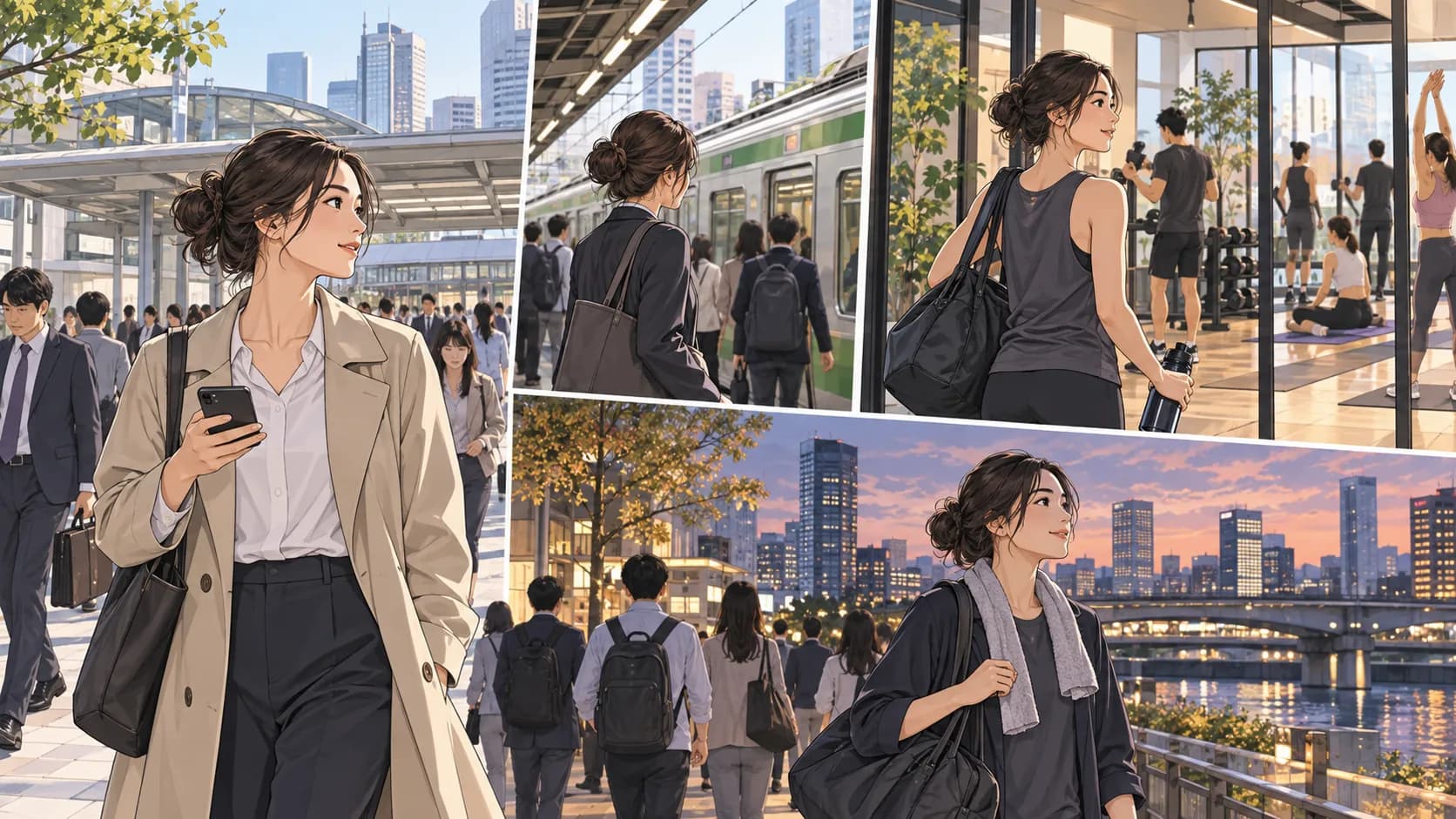
Check commute distance carefully: Tokyo's train system is excellent, but a gym that's two train changes from your apartment is a gym you won't go to on cold rainy days. Within 10 minutes walk of your home or office is the realistic standard for actually maintaining attendance.
Summary by neighborhood
| Neighborhood | Best option | Why |
|---|---|---|
| Roppongi / Azabu-Juban | Anytime Fitness + English-speaking PTs | Most English-capable environment |
| Hiroo / Minato | Anytime Fitness | International community, key fob access |
| Shibuya | Anytime Fitness, boutique studios | Central, diverse options |
| Shinjuku (West) | Konami Sports (if you have basic Japanese) | Large facility, good equipment |
| Marunouchi / Central | Anytime Fitness, in-building corporate gym | Office-crowd oriented, well-maintained |
| Koenji / West Tokyo | Joyfit24, Anytime Fitness | Lower cost, less crowded |
| North/East Tokyo wards | Anytime Fitness | Key fob access eliminates daily language need |
The right gym in Tokyo isn't the most English-friendly — it's the one within a 10-minute walk of where you actually spend time, with equipment that matches what you want to do. Start with a trial visit at two or three options near you, and join the one that feels most comfortable on a Tuesday evening at 7pm — which is what your average gym visit is going to look like.
Find gyms near your Tokyo neighborhood on fitnessgym.jp → Search Tokyo gyms